Let's cut through the noise. You've probably stumbled across forum posts or YouTube videos whispering about a "secret" market code called the 3-6-9 theory. It sounds mystical, maybe even a bit silly. I thought the same when I first heard it over a decade ago. But after years of staring at charts and seeing patterns repeat (and fail), I've learned that even the strangest ideas can hold a kernel of practical truth—if you know how to filter out the nonsense.
The 3-6-9 theory isn't a formal strategy from any finance textbook. You won't find it in a CFA curriculum. It's a grassroots, pattern-based concept that traders use to anticipate potential turning points in price charts. At its core, it suggests that markets move in recurring cycles of 3, 6, and 9 price bars (like candlesticks or time periods), and that these numbers have a predictive quality. Proponents see it as a map of market psychology and energy flow. Skeptics, rightly so, call it numerology.
Here’s my take, forged from experience: completely dismissing it is a mistake. The real value isn't in believing in magic numbers, but in understanding how the idea of repetitive, measurable rhythm influences a large group of traders. When enough people watch for the same signal, that signal can sometimes create its own reality. This guide won't sell you a holy grail. Instead, I'll show you what the 3-6-9 theory actually is, how traders try to apply it, the massive pitfalls most guides ignore, and how you can critically evaluate any market pattern for yourself.
Your Quick Guide to the 3-6-9 Theory
What Exactly Is the 3-6-9 Theory? Breaking Down the Basics
Forget the complex math for a second. The basic premise is simple: price action tends to exhibit completions or shifts at intervals related to the numbers 3, 6, and 9. This isn't about fundamental news or earnings reports. It's purely technical, focused on the shape and timing of the price chart itself.
The theory often gets tangled with ideas from Nikola Tesla, who famously said, "If you only knew the magnificence of the 3, 6 and 9, then you would have a key to the universe." Some traders have taken this quote and run with it, applying it to financial markets. The connection is speculative at best, but it gives the theory its enigmatic flavor.
In practice, you'll see two main interpretations:
- Time-Based Cycles: Looking for a trend change or consolidation to end on the 3rd, 6th, or 9th period (e.g., the 9th hourly candle after a major move).
- Price-Based Targets: Measuring swings in price and projecting that a pullback might end after retracing 33%, 66%, or near a 100% extension (numbers linked to 3 and 6).
I remember trying to force this on every chart early on. I'd draw lines everywhere, feeling a rush when a reversal happened near a "9" count. What I failed to see was the dozens of times it didn't work, which I conveniently ignored. That's the first trap.
Key Takeaway: The 3-6-9 theory is less a proven law and more a lens for pattern recognition. Its power, if any, comes from being a self-fulfilling prophecy when used by a crowd. Your job is to see if that crowd effect is present in your market.
How Traders Actually Use the 3-6-9 Theory on Charts
Let's get concrete. How does this move from vague idea to a mark on a trading screen? Most applications involve counting and measuring.
1. The Simple Bar Count Method
This is the most common starting point. After a clear swing high or low, traders start counting the subsequent price bars (candles).
- They watch for increased volatility or a potential reversal around the 3rd, 6th, or 9th bar.
- The "9" is often considered the most significant, a point where the initial energy of the move may be exhausted.
I've seen this work startlingly well in certain sideways, range-bound markets where no major news is expected. It's as if the market gets bored and turns on schedule. In strong trending markets fueled by news? Forget it. The count gets obliterated.
2. Combining with Support and Resistance
The smartest traders I know who mess with this stuff never use it alone. They combine the 3-6-9 count with a key support or resistance level.
For example, if price is approaching a major historical support level and it's the 6th or 9th candle down from the peak, that confluence increases the watchlist priority. The number count adds a timing layer to the price level. The level itself provides the actual trade rationale. The 3-6-9 just suggests *when* at that level might be more interesting.
3. The 3-6-9 Price Retracement Zones
Some apply the numbers to Fibonacci-like retracement grids. Instead of 38.2% or 61.8%, they look for reactions at 33.3% (1/3), 66.7% (2/3), and 100%. The table below shows how a trader might compare this to classic Fibonacci levels.
| Retracement Concept | Key Level 1 | Key Level 2 | Deep Retracement |
|---|---|---|---|
| Classic Fibonacci | 38.2% | 61.8% | 78.6% |
| 3-6-9 Inspired | 33.3% (approx.) | 66.7% (approx.) | 100% |
| Practical Note | Often clusters with 38.2%, creating a stronger zone. | Wider zone than 61.8%; requires tighter price action confirmation. | Not a retracement but a full measured move extension. |
The overlap between 33.3% and 38.2% is something I use constantly. It doesn't matter which theory is "right." The market often respects that blended zone.
The 3 Biggest Mistakes Traders Make with 3-6-9 (And How to Avoid Them)
This is where most online discussions fall flat. They preach the pattern but ignore the pratfalls. After coaching dozens of traders, here are the errors I see repeatedly.
Mistake 1: Treating It as a Standalone Signal
This is the cardinal sin. You see a perfect 9-count and enter a trade with no other evidence. No volume spike, no alignment with a trend on a higher timeframe, no nearby liquidity pool. You're essentially gambling on a number. The market doesn't care about your count.
The Fix: Use 3-6-9 as a coincidence filter, not a trigger. Let it highlight areas on the chart where you should pay extra attention. Then, wait for a real price action signal—a bullish engulfing candle, a break of a minor trendline, a rejection wick—to form in that area before considering an entry.
Mistake 2: Forcing the Count on Every Market
Different assets have different personalities. A highly algorithmic, news-driven instrument like the NASDAQ might show less respect for these patterns than a slower-moving commodity or a specific forex pair during Asian session hours. I found early on that it had more apparent structure in markets with lower institutional dominance.
The Fix: Backtest informally. Don't just look for wins. Spend an hour on a chart. Mark every obvious swing point and count forward. See how often price actually reacts at 3,6,9 and nowhere else. You'll quickly learn which of your watchlist instruments, if any, show a bias.
Mistake 3: Ignoring the Higher Timeframe Context
A perfect 9-count reversal signal on a 5-minute chart is meaningless if it's pointing directly against a powerful weekly uptrend. You're trying to catch a falling knife in a hurricane. The larger trend will swallow your cute little pattern whole.
The Fix: Always zoom out. Use the 3-6-9 idea on the timeframe you're trading, but only take signals that are in the direction of the trend on the next higher timeframe (e.g., use the 1-hour trend to filter 5-minute 3-6-9 setups). This alone will save you from most catastrophic losses.
A Reality Check: No pattern works all the time. The 3-6-9 theory has zero academic backing. It exists in the realm of market folklore and behavioral finance. Trading it successfully requires rigorous risk management—small position sizes and strict stop-losses—more than faith in the numbers.
A Real Chart Walkthrough: Applying 3-6-9 in a Volatile Market
Let me walk you through a recent scenario I watched unfold in Crude Oil futures. This wasn't a trade I took, but a perfect observational example.
The market had made a sharp, emotional sell-off on unexpected inventory data. The move lasted 11 strong bearish candles on the 30-minute chart. Pure panic. Then, it stalled. It started a choppy, sideways consolidation.
From the low of that panic sell-off, I started a simple count. The consolidation was messy, but you could define its range.
- Around the 3rd and 6th 30-minute bars from the low, there were minor upward pushes that got rejected. Nothing major.
- The interesting part was the 9th to 12th bars. This area coincided perfectly with a prior minor support level that had broken during the crash (now acting as resistance).
Price poked into this confluence zone—the 9+ count area AND the old broken support—and failed hard, resuming the downtrend. Did the 3-6-9 theory predict this? Not really. The key was the price level. But the count gave a timing clue that the bounce attempt was getting long in the tooth right as it hit a major technical wall. That's the practical synergy.
The lesson here is isolation vs. confluence. The count alone was a curiosity. The count plus a clear technical level created a high-probability area of interest for a continuation play.
Your 3-6-9 Theory Questions, Honestly Answered
Let's wrap this up. The 3-6-9 trading theory occupies a weird space in the trading world. It's not legitimate technical analysis in the classical sense, but it's also not pure fantasy because it attempts to quantify a real phenomenon: market rhythm and crowd psychology around numbers.
The most valuable perspective I can offer is this: use it as a contextual tool, not a crystal ball. Let it help you identify potential inflection zones on the chart. Then, let traditional price action, volume, and higher-timeframe trend confirmation make the final decision. This approach strips away the mysticism and turns a vague concept into a practical component of a disciplined trading process.
Ignore anyone who says it's the only key you need. Also, ignore anyone who dismisses it entirely without testing. The market's truth is usually found in the messy middle ground. Your job is to explore, test with small risk, and see what genuinely works for your style and the specific markets you trade. That's the real secret—not 3, 6, or 9, but the rigor of your own process.
Related Articles

What is the 90-90-90 Rule for Traders?
Ever wondered why 90% of traders lose 90% of their money in 90 days? Discover the 90-90-90 rule and how to avoid being p...
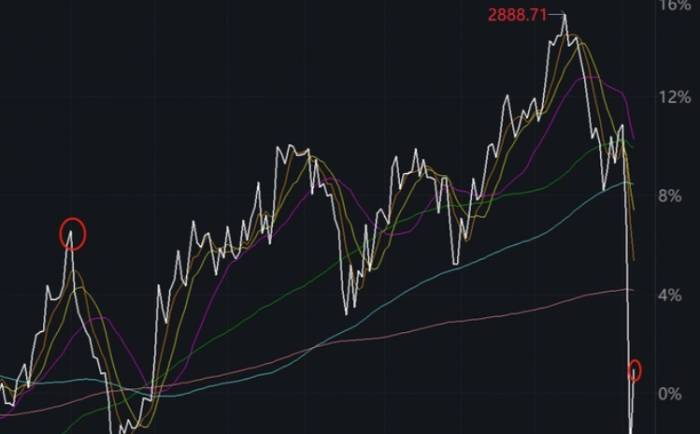
An annual return rate of 2000%! He is the "Treasury futures god" who is known wo
In 2020, it was an extremely challenging year for various industries. The spread of the COVID-19 pandemic severely impac...
Japanese Trading Master Reveals: Psychological Pitfalls That Kill Trades
Are you sabotaging your trades with emotional mistakes? Discover the psychological pitfalls identified by a Japanese tra...


These 5 methods can help you catch the best time to close positions
In the trading market, as the saying goes, the one who knows how to buy is an apprentice, and the one who knows how to s...