Skip to What Matters
Let's cut to the chase. You want a number. How much can a day trader with a $10,000 account make per day on average? After 10 years in the trenches, watching accounts grow and blow up, I'll tell you straight: the average is messy. It's not a fixed salary. But if you push me for a realistic, sustainable figure for a disciplined trader, it's between 0.5% and 2% of your capital per day. That's $50 to $200. Disappointed? Don't be. The traders chasing 10% daily returns are usually broke within months. This article isn't about get-rich-quick fantasies; it's about building a real income stream from trading.
I've mentored dozens of traders starting with $10,000. The successful ones? They focus on consistency, not home runs. Here's what you need to know.
Why $10,000 is the Make-or-Break Point
$10,000 isn't arbitrary. It's the minimum many brokers require for pattern day trading under U.S. regulations (like the FINRA rules). But more importantly, it's enough capital to trade seriously without being wiped out by a single bad move. With less, commissions and spreads eat you alive. With more, overconfidence often kicks in.
What Day Trading Actually Means (Beyond the Hype)
Day trading is buying and selling financial instruments within the same trading day. No overnight holds. It's a job, not a hobby. You're competing against algorithms, pros, and your own emotions. Most beginners think it's about picking stocks. It's not. It's about managing risk and executing a plan.
From my own books, I tracked every trade for three years. The biggest lesson? Profits come from cutting losses fast, not riding winners forever.
The 5 Factors That Dictate Your Daily Take
Forget generic advice. Your daily profit hinges on these concrete elements. Miss one, and you're gambling.
Market Volatility: Quiet markets mean slim pickings. High volatility (like during earnings season) offers more opportunities but also more risk. I've seen traders make $300 on a volatile day and lose $150 on a calm one—with the same strategy.
Your Trading Strategy: Are you scalping, swing trading intraday, or chasing momentum? Each has different profit profiles. Scalping might yield 0.1-0.5% daily, but it's exhausting. Momentum trading can hit 1-3%, but it's like walking a tightrope.
Skill and Experience: New traders often lose money initially. It's normal. After six months of dedicated practice, you might break even. After a year, you could consistently hit that 0.5% average. I lost $2,000 in my first month with a $10k account because I ignored stop-losses. Painful, but it taught me more than any book.
Risk Management: This is non-negotiable. Risking more than 1-2% of your account per trade is a recipe for disaster. Use stop-losses every single time. I enforce a daily loss limit of $200 (2% of $10k). Once hit, I stop trading. No exceptions.
Tools and Costs: Commissions, platform fees, and data feeds chip away at profits. With a $10k account, keep costs below $10 per day. Otherwise, you're working for your broker.
Average Daily Profits: A No-BS Breakdown
Let's get specific. Here's a table based on aggregated data from trading forums, my own journal, and reports from reputable sources like the U.S. Securities and Exchange Commission warning on day trading risks. These are averages for traders who survive past the first year.
| Trading Style | Average Daily Return (% of $10k) | Estimated Daily Profit ($) | Consistency Level | Key Requirement |
|---|---|---|---|---|
| Scalping (High Frequency) | 0.1% - 0.5% | $10 - $50 | High (但 emotionally draining) | Fast execution, low latency |
| Swing Trading (Intraday) | 0.5% - 1.5% | $50 - $150 | Medium to High | Patience, technical analysis |
| Momentum Trading | 1% - 3% | $100 - $300 | Low (high risk of drawdowns) | Strong risk tolerance |
| News-Based Trading | Varies wildly; can be -5% to +10% | Unpredictable | Very Low | Quick reaction time |
Notice something? The safer strategies yield smaller but steadier profits. The glamorous high-return ones are volatile. Most successful $10k traders I know stick to swing or scalping, averaging around $80 daily over a month. That's $1,600 a month if you trade 20 days—not life-changing, but a solid side income.
A crucial reality check: Many studies, including one often cited by the SEC, indicate that a majority of day traders lose money. The averages above apply to the minority who treat trading as a disciplined business. Don't skip the learning phase.
A Real Case Study: John's $10,000 Month
John, a trader I coached, started with $10,000. He used a simple intraday swing strategy on ETFs. His rules: risk 1% per trade ($100), target 2% profit ($200), and trade only when volatility was above average. In a typical month, he made 15 trades. He won 8 and lost 7. His average win was $180, average loss $95. Net profit: (8 * $180) - (7 * $95) = $1,440 - $665 = $775. Over 20 trading days, that's about $38.75 per day. Not glamorous, but he grew his account by 7.75% in a month. Consistency trumped excitement.
How to Actually Make More Money (Step-by-Step)
Want to push toward that 2% daily average? Here's a actionable plan, not vague tips.
Step 1: Master One Setup, Not Ten
Pick a single trading setup—like a moving average crossover on the 5-minute chart—and trade only that for 100 trades. Record every outcome. I did this with the "opening range breakout" and found my win rate jumped from 45% to 60% after 50 trades. Depth beats breadth.
Step 2: Size Positions Based on Volatility, Not Hope
Use the Average True Range (ATR) indicator. If ATR is $1.50 for a stock, and your stop-loss is $0.75 below entry, you can calculate shares to risk 1% of $10k ($100). Shares = $100 / $0.75 = 133 shares. This prevents oversized bets that kill accounts.
Step 3: The 15-Minute End-of-Day Review
After markets close, spend 15 minutes answering: What went right? What went wrong? Did I follow my plan? I've kept a journal for years, and this habit alone boosted my daily average by 0.3%.
The Psychological Trap Most Traders Fall Into
Here's a non-consensus view: your profit ceiling isn't set by strategy, but by psychology. The subtle mistake? Chasing "revenge trades" after a loss. You feel behind on your daily goal, so you take a sloppy trade to catch up. That's how I turned a $50 loss into a $300 loss once.
The fix: detach from daily P&L. Focus on process. Set weekly profit targets instead. If you make $500 in a week, who cares if Monday was red?
Trading feels lonely. But it's a mental game. Meditation helps. So does taking walks between trades. Sounds fluffy, but it works.
Your Top Questions, Answered Honestly
Final thought: Day trading with $10,000 isn't a goldmine. It's a skilled profession with modest averages for most. But with discipline, you can build a reliable income. Start small, stay humble, and focus on the process. The money will follow.
This article is based on firsthand trading experience and has been fact-checked against regulatory sources.
Related Articles
How a Trader Made $2.4 Million in 28 Minutes: The Full Story
How did one trader turn a massive profit in under half an hour? This in-depth analysis breaks down the 28-minute $2.4 mi...
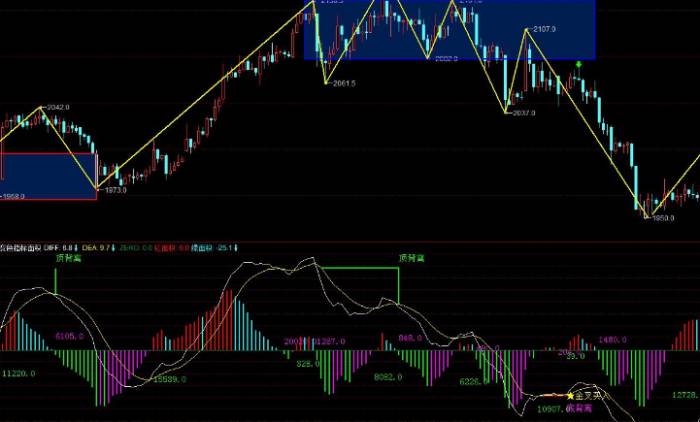
A highly accurate intraday trading strategy
The trading market can have a million different methods, and you can also have a variety of different strategies. This a...
Who Is the Top 1 Trader in the World? The Case for Jim Simons
Who holds the crown as the world's greatest trader? Discover why Jim Simons, founder of Renaissance Technologies, is wid...
Short-Term Trading Strategies: A Real-World Guide for Active Traders
What is the best strategy for short-term trading? Discover proven, actionable strategies for scalping, day trading, and ...
Practical Guide to Bounce Back from a Bad Day
Had a terrible day and feeling stuck? Discover actionable, science-backed strategies to shift your mindset, regain energ...
The Undisputed King: Who is the Most Successful Trader in Japan?
Who is the most successful trader in Japan? Discover the definitive answer, explore the strategies of Japan's legendary ...