Quick answer before the deep dive: if this is your first Japan trip and you want temples, quiet mornings and postcard streets, sleep in Kyoto. If you want late dinners, easy day trips and a cheaper bed, base in Osaka. I've done both — three nights in a Kyoto machiya near Shijo and five nights in a Namba business hotel — and the difference in how the trip feels is bigger than any guidebook admits.
What's in this guide (tap to jump)
- At a glance: Kyoto vs Osaka stay comparison
- Why stay in Kyoto: the case for slow mornings
- Why stay in Osaka: the case for base-camp energy
- Hotel costs and specific picks in each city
- How to use each city as a day-trip base
- Who should stay where: matching your travel style
- Real questions travelers keep asking
At a glance: Kyoto vs Osaka stay comparison
You need the numbers fast. Here's the honest snapshot from my own bookings and receipts.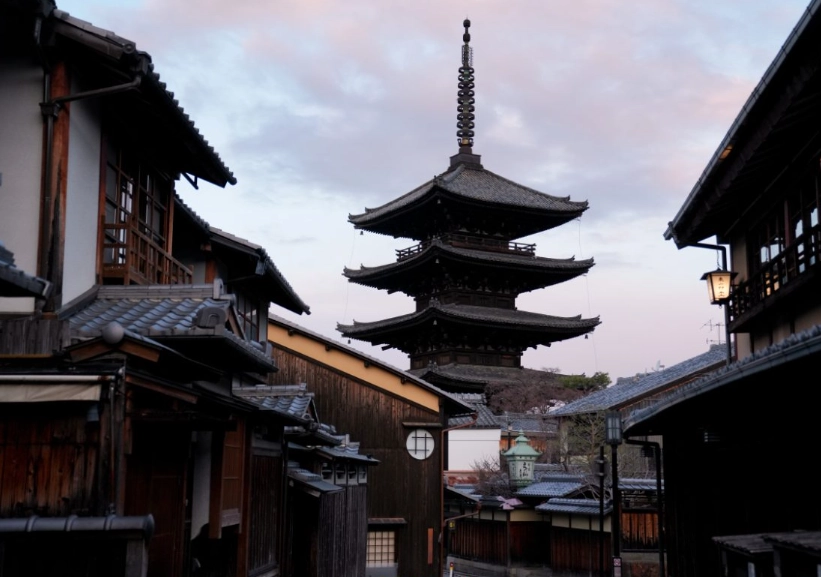
| Factor | Kyoto | Osaka |
|---|---|---|
| Typical double room (mid-range) | ¥13,000–¥22,000 | ¥9,000–¥15,000 |
| Transit to major sights | Bus-heavy; 15–25 min to temples | Subway; 20–40 min to Kyoto sights |
| Dinner options after 9 pm | Limited, many kitchens close early | Wide open, izakaya run late |
| Morning atmosphere | Quiet lanes, temple bells, empty streets | Bustling, commuter crowds |
| Day-trip access | Nara 45 min, Osaka 30 min | Nara 35 min, Kyoto 30 min, Kobe 25 min |
| Best for | Culture-focused, early risers | Foodies, night owls, budget travelers |
One trap most first-timers fall into: they book Kyoto because "it's the cultural capital" without realizing Kyoto's bus network is slow and crowded at peak hours. If you're staying near Kyoto Station, you'll rely on buses constantly. Near Gion or Kawaramachi, you can walk most of the eastern sights.
Why stay in Kyoto: the case for slow mornings
I'll never forget waking up at 6:15 am near Kennin-ji and having the stone-paved lanes almost to myself. No tour groups, no selfie sticks — just a shopkeeper sweeping and the smell of incense. That's the Kyoto you can only get by sleeping there.
Concrete hotels I'd book again
- Hotel Kanra Kyoto — 190 Kitamachi, Shimogyo Ward. Machiya-style rooms, walkable to Shijo. Double around ¥18,000–¥25,000. Book early; it fills fast in spring.
- Nine Hours Kyoto Teramachi — capsule option, 588 Teianmaenocho, Higashiyama. Roughly ¥4,500–¥6,000. Clean and central, but light sleepers should skip pods.
- Kyoto Granbell Hotel — 27 Yamatocho, Higashiyama. Near Gion, doubles from ¥12,000. I found the rooms small but the location unbeatable for evening walks.
Food note: Omen Ginkakuji (74 Ishibashicho, Sakyo Ward; open 11 am–2:30 pm and 5–8 pm; around ¥1,700 for udon) taught me that Kyoto cuisine isn't all kaiseki. Their udon broth has a faint sesame undertone I still think about. But — and this is the part guides skip — many central Kyoto restaurants close by 8:30 pm. Eat early or you'll be stuck at a convenience store.
Non-obvious tip: Kyoto works best with a two-night minimum. One night is a waste — you'll spend it recovering from the train and leave before the early-morning magic. Also, don't overlook the eastern side around Gion and Higashiyama for accommodation; it beats Kyoto Station for atmosphere even if you sacrifice 10 minutes of transit.
Why stay in Osaka: the case for base-camp energy
Osaka feels like a city where things happen. My first night in Namba, I wandered into a tiny yakitori counter at 10:30 pm and ended up chatting with a chef who'd worked in Chicago. That experience barely exists in Kyoto at that hour.
Specific Osaka hotels
- cross hotel Osaka — 2-2-6 Nanbanaka, Naniwa Ward. Double from ¥14,000. Right by Dotonbori, noisier but electric. Request a high floor.
- Hotel Vischio Kyoto (Osaka side alternative) — skip; better options exist. Instead: Wayne Hotel Namba at 1-3-3 Motomachi, Naniwa Ward. Doubles from ¥11,000. Compact but spotless, five minutes to Namba Station.
- Hostel Mitsuwaya — 2-9-9 Dotonbori, Chuo Ward. Dorm beds around ¥3,500. Great for solo travelers, short walk to the river.
Eat here: Kushikatsu Daruma in Shinsekai (1-4-4 Ebisuhigashi, Naniwa Ward; open 11 am–10 pm; around ¥1,500–¥2,500 per person). The batter is thinner than the tourist-trap versions. Sit at the counter and ask for the seasonal skewer. And listen — the "no double dipping the sauce" rule is enforced with a sharp glare by staff. I saw a tourist get lectured. Learn from their mistake.
What I'd do differently: staying near Namba is convenient but noisy. If you value sleep, book north of the Dotonbori canal or around Hommachi. You'll still reach everything in 15 minutes but won't hear shouting groups at 1 am.
Hotel costs and how the money actually breaks down
Here's a realistic look at what five nights cost, based on my bookings in shoulder season (April and November, mid-range double rooms).
| City & Hotel Type | Nightly Rate | 5-Night Total | Where It Puts You |
|---|---|---|---|
| Kyoto — Granbell Hotel (mid-range, Gion) | ¥14,000 | ¥70,000 | Walk to Yasaka Shrine, Gion, Kiyomizu in 20 min |
| Kyoto — Nine Hours (capsule, Teramachi) | ¥5,000 | ¥25,000 | Central shopping street, bus stops everywhere |
| Osaka — Wayne Hotel Namba (mid-range) | ¥11,000 | ¥55,000 | Five-minute walk to Namba Station |
| Osaka — Hostel Mitsuwaya (dorm) | ¥3,500 | ¥17,500 | Dotonbori location, budget-friendly |
The money gap is real — roughly 20–30% more in Kyoto for the same tier. But the savings aren't just hotel. Osaka's cheaper food and later opening hours save money in ways guides don't quantify. I spent about ¥5,000 per day on meals in Osaka versus ¥7,000 in Kyoto, mostly because Kyoto dinner options near tourist sights are pricey.
How to use each city as a day-trip base
This is where the stay decision really bites. Both are strong hubs but for different routes.
From Osaka you can easily cover
- Nara — 35 min via Kintetsu Limited Express (¥570). Feed the deer, see Todai-ji, back by afternoon.
- Kobe — 25 min on JR Special Rapid (¥420). Kitano-cho and the waterfront are easy half-day adds.
- Himeji Castle — 60 min via JR Special Rapid (¥1,520). A full half-day, worth the early train.
From Kyoto you can easily cover
- Arashiyama — 15 min on JR Sagano Line from Kyoto Station to Saga-Arashiyama (¥240). Do it before 9 am.
- Fushimi Inari — 5 min on JR Nara Line from Kyoto Station (¥150). Combine with evening hike to the top for quieter moments.
- Osaka — 30 min on JR Special Rapid (¥570). Easy evening dinner run.
One genuinely underrated move: stay in Kyoto and do Osaka as a late-afternoon food trip. The last trains from Osaka to Kyoto run well past 11 pm, and the ride is short. I've done this and it felt like two trips in one.
Who should stay where: matching your travel style
You'll be happier in Kyoto if: you wake up early, you want to see temples without crowds, you're okay with quiet evenings, and your main draw is history and atmosphere.
You'll be happier in Osaka if: you're a food person, you want a night scene, you're watching your budget, or you're using it as a hub for day trips around Kansai.
The compromise that works: split it. Three nights in Kyoto, two in Osaka. You get both flavors and you're not locked into one pace for a week. I've done this and it beats any single-base plan.
What most people get wrong: they assume Kyoto and Osaka are interchangeable because they're close. They're not. You're picking a rhythm — quiet mornings and early dinners, or late nights and busy streets. Neither is wrong. Just know what you're signing up for.
Real questions travelers keep asking
If I'm traveling with kids, which city is easier to stay in?
Osaka, no contest. The subway is easier to navigate with strollers, hotels are cheaper (kids mean bigger rooms, which means bigger bills), and you won't run out of dinner options early. Kyoto's buses are cramped and don't do well with diaper bags during rush hour. Kid-friendly spots like Osaka Aquarium Kaiyukan (1-1-10 Kaigandori, Minato Ward; open 10 am–8 pm; ¥2,700 adult) are also right there.
I want to see Kyoto's temples at sunrise. Should I base in Osaka and just take an early train?
You can — the first JR trains get you to Kyoto around 5:50 am. But you'll be racing to beat crowds, and you'll be tired by lunch. If early-morning temple visits are your main goal, book at least two nights in Kyoto. The whole point of being there at 6 am is that you rolled out of bed, not that you jumped on a train.
Is it true that Kyoto hotels charge a separate city tax?
Yes, but it's small — typically ¥200–¥1,000 per person per night depending on the room rate. I've never seen it ruin a budget, but it surprises some travelers at checkout. Osaka has a similar tax at slightly different rates. Both are usually collected at the hotel, not included in your online booking.
Which city is quieter for light sleepers?
Kyoto by a wide margin — but choose the right neighborhood. Stay away from Kawaramachi and Shijo at night, which get loud. The area north of Sanjo or around Okazaki is calm. In Osaka, avoid Dotonbori and Namba for sleeping; Hommachi and Kitahama are quieter and still convenient. I learned this the hard way after one terrible night near the canal.
Fact-check: transit times, ticket prices, and hotel rates were cross-checked against JR West, Kintetsu Railway, and my own booking confirmations from multiple trips.

Leave a Comment