My first meal in Tokyo was a disaster. I walked into a ramen shop, pointed at a random button on the ticket machine, and ended up with a bowl of cold noodles in a broth so fishy I could barely finish it. That was years ago. Since then, I've eaten my way through konbini shelves, standing sushi bars, and tiny izakaya back alleys across the country. This Japan food guide for beginners is the shortcut I wish I'd had — no fluff, just the stuff that actually matters when you sit down to eat.
What's in this guide
What to Eat in Japan: 8 Dishes Beginners Should Try First
Here's my short list of dishes that are easy to find, hard to mess up, and give you a real taste of everyday Japanese food. I've added the details you'll actually need — prices and where to find them.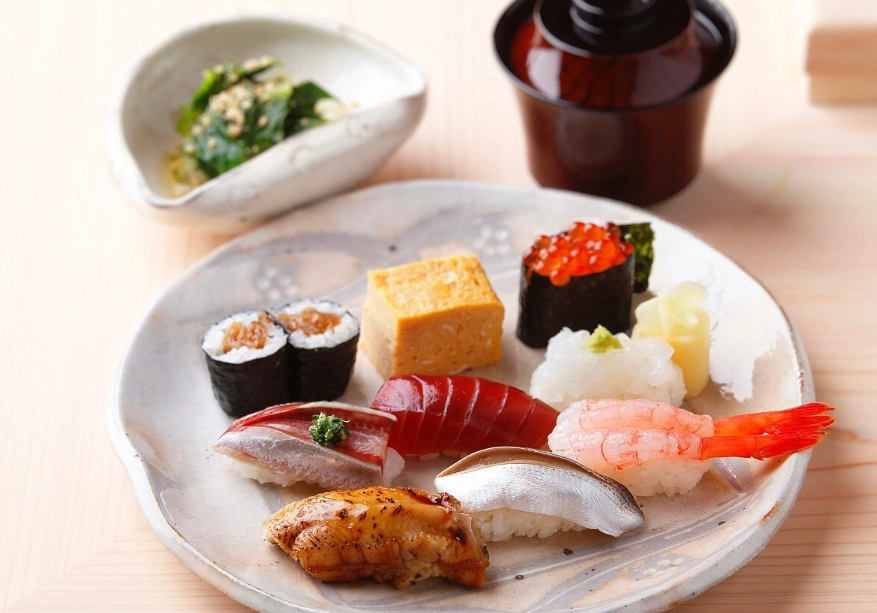
1. Ramen (¥800–¥1,200)
Every region has its own style. Tokyo-style shoyu ramen at a place like Fuunji in Shinjuku (address: 2-14-3 Yoyogi, Shibuya-ku; open 11am–3pm, 6pm–9pm) is a good entry point. The tsukemen dipping noodles there run about ¥1,100. Look for ticket machines at the entrance — you pick your dish, pay, and hand the ticket to the staff.
2. Sushi (¥150–¥500 per plate)
Conveyor belt places like Genki Sushi are forgiving for beginners. A plate of two pieces costs ¥120–¥300. If you want a step up, try a standing sushi bar like Uogashi Nihon-Ichi in Shibuya (address: 1-9-6 Dogenzaka; open 11am–11pm). Expect to pay ¥2,000–¥3,000 for a filling meal.
3. Tempura (¥1,000–¥2,000)
Tsunahachi in Shinjuku (address: 3-31-8 Shinjuku; open 11am–10pm) has been around since 1923. The lunch set with shrimp, fish, and vegetables is around ¥1,500. Sit at the counter and watch the chef fry each piece to order.
4. Udon and Soba (¥500–¥900)
Cheap, fast, and everywhere. Stand-up soba shops at train stations charge ¥400–¥600 for a bowl. Slurp loudly — it's considered polite.
5. Okonomiyaki (¥900–¥1,300)
A savory cabbage pancake you cook yourself on a griddle at the table. Try Okonomiyaki Chitose in Osaka (address: 1-2-10 Taishi, Nishinari-ku; open 11:30am–10pm). The mixed-okonomiyaki is around ¥1,100.
6. Yakitori (¥150–¥300 per skewer)
Grilled chicken skewers at izakaya. Torikizoku is a chain with most items around ¥350. Look for the yellow sign.
7. Onigiri (¥120–¥200)
Rice balls from any convenience store. The tuna mayo one is a classic. Grab one for breakfast.
8. Konbini desserts (¥150–¥350)
Don't sleep on 7-Eleven's egg sandwich or Lawson's premium roll cake. I'm serious. They're better than plenty of café desserts.
How Do You Order Food in Japan Without Speaking Japanese?
This is the question I get most from friends visiting for the first time. The short answer: it's easier than you think, but there are a few tricks.
At sit-down restaurants, staff will usually ask "Nan-mei-sama desu ka?" (How many people?). Hold up your fingers. They'll seat you. When you're ready to order, say "Sumimasen" to get attention, then point at the menu. "Kore onegaishimasu" (This one, please) works everywhere.
For payment, cash is still king at small spots. Convenience stores and chains take credit cards, but I've been turned away from tiny izakaya because I only had plastic. Carry at least ¥5,000 in cash.
Japanese Food Etiquette: The Unwritten Rules Nobody Tells You
You don't need to memorize a rulebook. But a few small things go a long way.
Slurp your noodles. It's not rude — it's how you show you're enjoying the food. I felt weird doing it at first, but now it's second nature.
Don't tip. It can actually confuse staff. If you want to show appreciation, say "Gochisousama deshita" (Thank you for the meal) when you leave.
Pour for others, not yourself. At an izakaya with a group, fill your neighbor's glass and they'll fill yours. If you pour your own, it's seen as a bit selfish.
Use the oshibori (wet towel) to wipe your hands, not your face. I've seen tourists use it like a face cloth and get side-eye from the chef. Save the face wiping for the bathroom.
Don't stick chopsticks upright in rice. It looks like a funeral ritual. Lay them on the chopstick rest or across the bowl.
At sushi counters, eat each piece in one bite. If it's too big, ask for a smaller cut with "Chiisaku onegaishimasu."
How to Eat Well in Japan on a Budget
You don't need to spend ¥5,000 per meal. Here's how I keep food costs under ¥3,000 a day.
| Meal | Budget Option | Typical Price |
|---|---|---|
| Breakfast | Onigiri + coffee from konbini | ¥250 |
| Lunch | Set meal at a teishoku chain (Ootoya, Yayoiken) | ¥700–¥900 |
| Dinner | Gyudon bowl at Sukiya or Yoshinoya | ¥500–¥700 |
| Snack | Melon pan from a bakery | ¥200 |
One more thing: supermarket discount stickers. After 7pm, bento boxes and sushi at places like Life or Seiyu get 20–50% off. I've had sushi dinner for ¥400 this way. Look for the "20% off" or "半額" (half price) stickers.
FAQ: Real Questions From First-Timers
What's the biggest mistake beginners make with Japanese food?
Assuming every restaurant takes credit cards. Many small ramen shops and izakaya are cash-only. I learned this the hard way in a tiny yakitori spot in Fukuoka — had to leave my phone as collateral while I ran to an ATM. Always carry cash.
Do I really need to slurp my noodles?
You don't have to, but it helps cool the noodles down and some chefs take it as a compliment. If it feels uncomfortable, just eat quietly. Nobody will get upset.
How do I know if a restaurant is good without English reviews?
Look for a line of locals. If the customers are mostly Japanese and the place is packed, it's usually a safe bet. Also check if the chef is behind the counter — open kitchens mean fresher food. Tabelog is the local equivalent of Yelp, but the ratings are harsh (a 3.5 is actually good).
Can I eat while walking?
Generally, no. Locals avoid it. If you grab a crepe at Takeshita Street in Harajuku, eat it standing near the shop. Walking and eating is seen as messy. That said, I've never seen anyone get scolded for sipping a drink on a train platform.
What's the deal with table charges (otoshi)?
At many izakaya, you'll be charged a small seating fee (usually ¥300–¥500) that comes with a tiny appetizer. It's not a scam — it's standard. Factor that into your budget.
I've double-checked prices and hours with the shops directly or via recent visitor reports. Japan's food scene changes fast, so if a place is closed on a public holiday, don't be surprised. That's normal.

Leave a Comment