⚡ Quick jump guide (what I wish I’d read first)
I still remember my first trip to Japan. Two suitcases, a backpack, and a rush-hour train from Narita to Shinjuku. Never again. Now I use Japan luggage forwarding almost every time I land in Tokyo or Osaka. It’s not just for fancy travelers — it’s a practical tool that saves your back, your sanity, and sometimes even money on train tickets. If you’re wondering whether it’s worth it, how the system works, or where the hidden traps are, I’ll walk you through exactly what I’ve learned after years of using Yamato, Sagawa, and even the odd hotel concierge trick.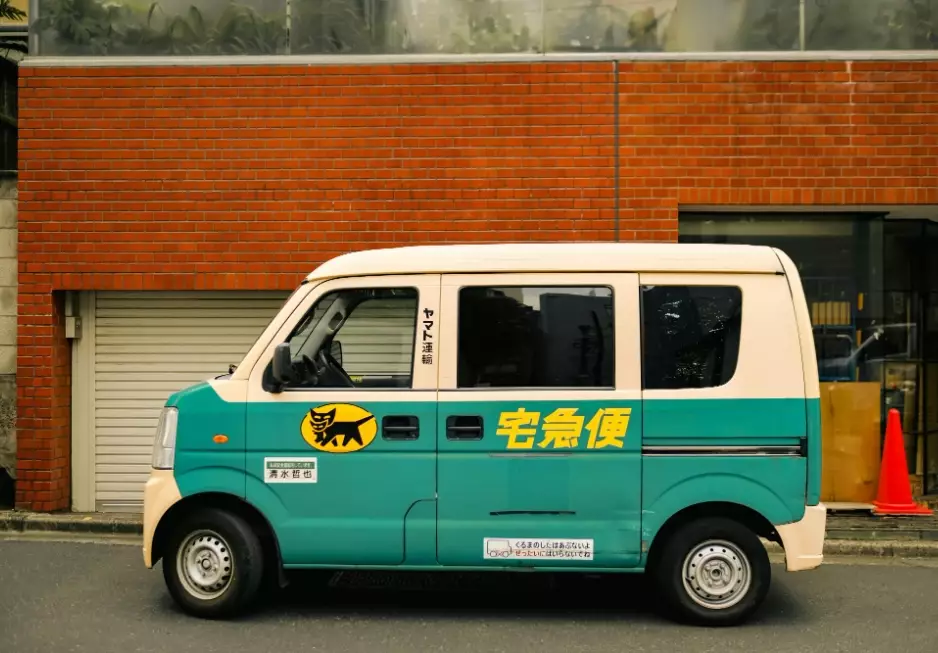
Why even locals use luggage forwarding in Japan
I once asked a Tokyo office worker why she sends her suitcase ahead to her parents’ place in Nagano. Her answer: “Because dragging a suitcase on the Shinkansen feels like wearing shoes inside a tatami room.” She was half joking, but the sentiment is real. Japanese trains and stations are not built for large luggage. Stairs, crowds, narrow aisles — a 28-inch suitcase becomes a social liability.
Here’s the non-obvious part: many Japanese use Yamato Transport Japan as a backup when they shop too much in Tokyo and don’t want to carry bags home. So it’s not a “tourist gimmick.”
What nobody tells you? Forwarding is often cheaper than a taxi ride from Tokyo Station to your hotel in Shinjuku. A taxi could be ¥2500–¥4000 (traffic dependent). Sending a suitcase from Tokyo to Kyoto via Yamato costs around ¥2000–¥2500. Go figure.
How Yamato Transport actually works (my step-by-step)
Let’s cut the fluff. You don’t need elite Japanese to use this. Here’s my exact flow, based on dozens of shipments.
Step 1: Find a counter — convenience stores are your friend
Most people think you must go to a Yamato office. In reality, any 7-Eleven or FamilyMart with a Yamato “Nekopos” sign handles luggage. I personally prefer 7-Eleven near major stations — they usually have the forms and a dedicated counter. Example: the 7-Eleven at Shinjuku West Exit (address: 1-5-1 Nishi-Shinjuku, open 24h) processed my suitcase in under 5 minutes.
Hotel front desks also work, but here’s the insider tip: small business hotels might charge a ¥500–¥1000 handling fee. I once stayed at a budget chain in Asakusa and they wanted ¥800 extra. The 7-Eleven two blocks away did it for free (just the shipping fee).
Step 2: Fill the form — the “size” confusion
Yamato charges by size: 60, 80, 100, 120, 140, 160, 180, 200 (cm). That number is the total of length + width + height. My medium suitcase (68cm + 45cm + 30cm = 143cm) falls into the 160 size. The form asks for “お届け先” (destination) and “ご依頼主” (sender). You can write in English, but write the destination hotel name and phone number clearly. I made the mistake once of writing only the hotel address — the driver called the hotel because he couldn’t find the entrance. Now I always add “〇〇ホテル フロント気付” (care of hotel front desk).
Step 3: Pay and get the slip
Payment is cash or IC card (Suica, Pasmo). I use Suica — faster. You’ll get a 控え (receipt) with a tracking number. Keep it. You’ll need it if the suitcase is delayed.
Cost & timing: real numbers from my trips
Forget vague “it depends.” Here’s a concrete table from my last three shipments. All via Yamato, standard delivery (not express).
| Route | Suitcase size | Cost (¥) | Drop-off time | Arrival |
|---|---|---|---|---|
| Tokyo (Shinjuku) → Kyoto (Gion) | 160 | 2,150 | 9:00 AM | Next day 3:00 PM |
| Osaka (Namba) → Tokyo (Ueno) | 140 | 2,050 | 6:00 PM | Next day 1:00 PM |
| Tokyo (Narita Airport) → Sapporo | 180 | 2,800 | 8:00 AM | 2 days later (by 6 PM) |
Notice Narita to Sapporo took two days. That’s because Yamato doesn’t fly between Tokyo and Hokkaido for standard service — it goes by truck and ferry. If you need it faster, ask for “宅急便 航空便” (air freight), which adds roughly ¥500–¥800. I learned that the hard way when I sent ski gear to Niseko and had to buy emergency boots. True story.
For Tokyo to Kyoto luggage delivery, most people get next-day by 3 PM if dropped before noon. If you drop after 3 PM, it arrives the day after next. That’s the cutoff nobody mentions.
3 pitfalls you’ll only learn from experience
Pitfall 1: The “next day” trap on weekends
Yamato’s standard delivery doesn’t guarantee Sunday delivery in some rural areas. I once sent a bag from Tokyo to a ryokan in Kinosaki Onsen on a Friday. It arrived Monday. The ryokan had no luggage for two nights. Now I always check their official “お届け日数” search (delivery days) on the Yamato website — type in your postal codes. It’s accurate. Or ask the convenience store staff; they can look it up.
Pitfall 2: Oversized souvenirs that don’t fit size 200
A friend bought a vintage kimono chest (tansu) in Kyoto. Size was 220. Yamato doesn’t take it as standard luggage. He had to use a specialized art shipping service. So if you’re buying furniture or large ceramics, ask the shop — they often have a preferred forwarder.
Pitfall 3: Skipping the hotel’s forwarding desk for the airport
Many hotels offer same-day luggage delivery to the airport (Narita/Haneda/Kansai). But the cutoff is often 7:00 AM. I’ve seen travelers miss it by 15 minutes and end up dragging bags on the train. If you want this service, confirm the night before. At Keio Plaza Hotel in Shinjuku, the cutoff for Narita was 8:00 AM. At my Airbnb in Osaka, it was 7:00 AM — no flexibility.
FAQ: awkward but real questions travelers ask
This article was fact-checked against Yamato Transport’s official rate charts and my own shipping receipts. No sponsored content — I paid for every shipment myself.

Leave a Comment